Ohio’s Open Primary System Rewards Chaos Over Conviction
February 11, 2026
Eighteen years ago this month, talk radio host Rush Limbaugh urged his conservative listeners to cross over and vote for Hillary Clinton in Ohio’s presidential primary. He called it “Operation Chaos.” The strategy was to prolong the Democratic contest and boost the candidate he believed would be easier to defeat in November.
For a moment, it appeared to work. Clinton’s Ohio victory broke Barack Obama’s 11-state winning streak and slowed his momentum. Obama ultimately secured the nomination, but the scheme left behind a lingering question that still matters today: Should Ohio’s primary system invite strategic crossover voting in the first place?
Ohio operates under a type of an open primary system. Voters don’t register by party. Instead, party affiliation is determined by the ballot a voter selects in a primary election. A Republican may choose a Democratic ballot, and a Democrat may choose a Republican ballot, effectively changing parties instantly at the polling location.
Michigan has a similar law. In 2010, activists there openly encouraged Democrats to “hijack” the Republican gubernatorial primary in support of the candidate they believed would be easier to defeat in the general election. In 2012, a Republican presidential candidate placed robocalls encouraging Democrats to cross over and vote for him. In 2014, Democrats in Mississippi publicly debated whether to cross over in a Republican U.S. Senate primary runoff. The party labels may change, but the incentive structure remains the same. When the rules permit it, campaigns and activists will test the boundaries.
Supporters of open primaries argue that such tactics rarely change outcomes and that open systems promote broader participation. Those are fair considerations, but they miss a more fundamental point. Primaries are not general elections. They exist so political parties can choose the candidate who will represent them before the broader electorate in November.
Political parties are voluntary associations. The U.S. Supreme Court has repeatedly recognized that they possess First Amendment associational rights, including the right to define their membership and select their nominees. In nearly every other civic institution, membership matters. Shareholders elect corporate boards. Union members elect union leaders. Members of a faith community choose their clergy. When participation is untethered from affiliation, the organization ceases to reflect its members’ will.
Open primaries blur that distinction. They allow voters who may not share a party’s principles or priorities to influence its internal decision-making process. Even if most voters act in good faith, the structure itself creates incentives for gamesmanship.
Those incentives are particularly strong in heavily Republican or Democratic counties, where the primary often determines who will ultimately hold office. In those communities, the May primary effectively functions as the real election, and November is just a formality. Voters in the minority party have every incentive to weigh in on the dominant party’s contest. That behavior may be rational, but it shifts the primary away from its intended purpose.
None of this is about limiting participation in our democracy. Every eligible voter should have a full and equal voice in the general election. But primaries serve a different function. They are internal selection mechanisms for political organizations. Conflating the two weakens both.
Critics of closed primaries often raise concerns about independent voters. That concern deserves respect, but a system that requires voters to declare party affiliation before participating in a primary doesn’t silence anyone. It simply asks voters to make their affiliation clear in advance rather than at the ballot box. The general election remains open to all.
A closed primary system would not eliminate strategic behavior entirely. No system can. But it would better align incentives with conviction. It would reinforce the principle that parties, like other voluntary associations, have the right to choose their nominees without outside interference.
As another statewide primary approaches this May, Ohio lawmakers should revisit whether our current system promotes genuine representation or merely invites calculation. The general election belongs to the public. The primary belongs to the parties. Our laws should clearly and consistently reflect that distinction.
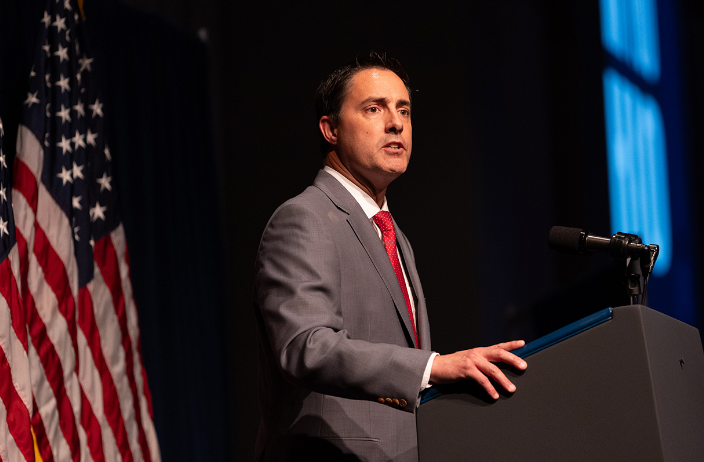
Frank LaRose is Ohio’s 51st Secretary of State.