The Lady Doth Protest Too Much
February 11, 2026
Part of what makes Shakespeare so enduring is that you can watch a play written 425 years ago and still find themes relevant to the present day.
One line from Hamlet stands the test of time because it applies to so many of our current circumstances. In the words of Queen Gertrude, “The lady doth protest too much, methinks.”
That classic idiom has become a timeless response to performative outrage, or what some today might call the soccer flop. Our current national debate over redistricting is a good example. We seem stuck in an endless routine of outrage and protest over so-called fair districts, with few people understanding exactly what our state and federal constitutions require to draw political boundaries.
Fortunately, our process in Ohio proved resilient to those protests, as we reached a unanimous, bipartisan agreement a few weeks ago on a new congressional district plan. But it wasn’t without drama. Critics packed Statehouse hearing rooms, often wearing the same coordinated t-shirts and shouting down members of the General Assembly or the Redistricting Commission with the same tired catcalls. It’s often the same faces, the same slogans, and the same routine.
As elected leaders, we should never dismiss the legitimate outrage of the electorate, and some of these voices are indeed well-intended. But I can’t help but think much of this scripted circus is more likely a page from a partisan playbook than a genuine concern about fairness in redistricting.
You won’t find most of these protesters shaking their proverbial fist at Ohio’s eight largest metropolitan cities, none of which has a single Republican on its governing council. Columbus has the largest metropolitan population of Republicans in the state, yet its nine city council members are exclusively Democrats.
The city’s rigged voting system stoked public outrage this month, when a Democratic city council candidate won a majority of the votes in his district but ultimately lost the race to another Democrat who won more votes outside of the district. This scheme, which The Columbus Dispatch blasted as “uncommon and unfair,” was cooked up several years ago to block Republicans from winning even a single seat on the city council.
Columbus isn’t alone. Cleveland has 17 Democrats on its council and no Republicans, despite also having one of Ohio’s largest concentrations of urban Republican voters. Akron, Canton, Cincinnati, Dayton, Toledo and Youngstown also have substantial Republican voting blocs but not one Republican council member. These are audacious examples of gerrymandering at its worst, but good luck finding any of the above-mentioned protesters shouting down their council meetings about fair representation.
Their theatrics are about power, not principle. The League of Women Voters spends extraordinary time and energy protesting Ohio’s statewide redistricting process, controlled by majority Republicans, yet they remain oddly silent on the complete lack of representation in Ohio cities governed exclusively by Democrats.
Ohioans are becoming wise to the hypocrisy. Last year, Democrats tried to enshrine their gerrymandering agenda into our state constitution, and voters overwhelmingly rejected it by nearly 10 points. Months later, Democratic leaders in the Statehouse proved our current redistricting process works just fine, despite the unending protests of those who wanted more.
Most Ohioans I talk to know redistricting is tough, but they also know fake outrage when it’s performed for the cameras. Voters want a process that works, not activists auditioning for their next viral moment. Ohio can be proud that its bipartisan redistricting process produced a new plan that won unanimous, bipartisan approval. For once in this highly charged debate, solutions prevailed over shouting, slogans, and stunts.
Unfortunately, the opposite is too often true. Only when ultra-hardcore partisans can abuse the redistricting process to their advantage do they consider it fair, and only then does the lady not protest too much.
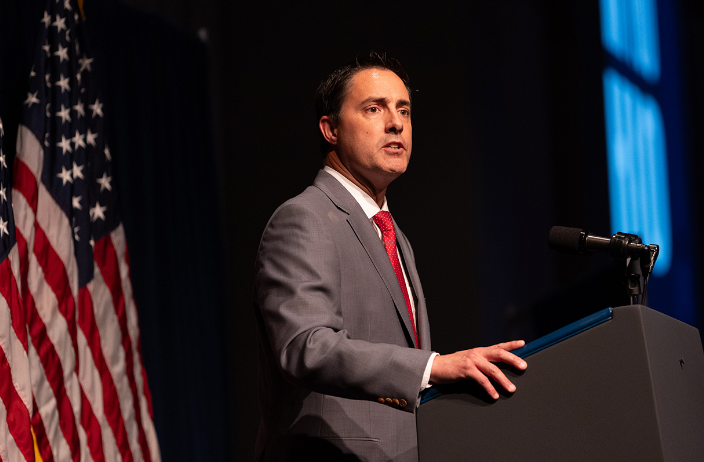
Frank LaRose is Ohio’s 51st Secretary of State. He also chairs the Ohio Ballot Board and serves as a member of the Ohio Redistricting Commission. He helped create Ohio’s current bipartisan redistricting process, which voters overwhelmingly approved with 75 percent of the vote in 2018 and upheld in 2024.